Cast Iron Repair Electrodes
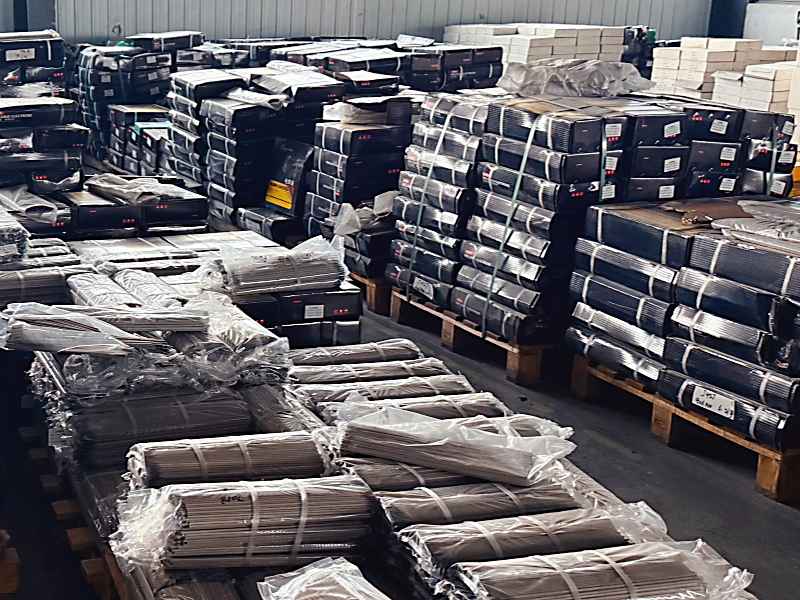
AWS A5.15
- AWS A5.15 Cast Iron Electrodes
- INQUIRY
AWS A5.15 Cast Iron Electrodes: From Designation to Delivery
A purchase order for cast iron electrodes usually begins with a designation copied from a drawing, a casting grade from a foundry certificate, or a workshop requirement such as a face that has to be machined afterwards. Each starting point needs a different route through AWS A5.15.
AWS A5.15 is a filler metal classification specification. It defines how cast iron electrodes and rods are grouped, what chemical analysis supports a classification, and how product is marked. It is not a repair procedure, a weldability assessment for a specific casting, or an acceptance standard for a finished repair.
1. Start with the order, not with the catalogue
| Stage | Question the buyer brings | Sections to read | What leaves the page |
|---|---|---|---|
| Before the order | Which document governs, and how is the code built? | §2 – §4 | A designation checked against the right system |
| Choosing | Which family fits this casting and this service? | §5 – §7 | A shortlist plus the tests to add |
| Specifying and receiving | What goes on the PO, and what is checked on the carton? | §8 – §10 | A specification line and a goods-in checklist |
| Supply | Which diameters, lengths, packing and marking can be quoted? | §11 – §13 | A request with enough detail to quote |
Two habits shorten correspondence. Name one governing system per order line: a designation such as ENi-CI and an EN ISO 1071 class may describe similar products, but their test packages differ. And treat the designation as the start of the conversation rather than the whole specification — section, restraint, contamination, machining and inspection sit outside the classification.
Build an A5.15 enquiry
Five inputs generate a draft you can copy into an email. Nothing is sent from this page.
2. The document: designation, edition status and scope limits
The document generally cited on enquiries is ANSI/AWS A5.15:1990 (R2016), Specification for Welding Electrodes and Rods for Cast Iron; the ASME counterpart is SFA-5.15 in BPVC Section II, Part C. The AWS publication page labels this edition as HISTORICAL. That label is a status note, not a judgement on whether a given project may still invoke it: the edition that governs an order is the one named in that order, and some projects name a reaffirmed or otherwise specified edition. Confirm the current status and any successor document against the AWS catalogue before quoting an edition as current.
The scope covers four product forms: covered electrodes for shielded metal arc welding, rods for oxyfuel gas welding, bare electrodes and rods for gas metal arc and related processes, and tubular cored electrodes. Copper-base rods intended for non-fusion joining of cast iron sit outside the scope; cut-length rods prepared for gas tungsten arc welding are not given classification requirements here. AWS A5.11 and A5.14 defer cast iron applications to A5.15.
| Document | What it contributes here | How to reference it |
|---|---|---|
ANSI/AWS A5.15:1990 (R2016) | Classification, chemical analysis, marking, packaging, application annex | Name the edition in the PO; note the historical status label |
ASME SFA-5.15 | Adoption into BPVC Section II, Part C | Name it when the work is code-controlled |
GB/T 10044 | Chinese EZ model designations and Z brand numbers, with covering type and current encoded in the final digit | Use when the drawing carries Z308 / EZNi-1 |
EN ISO 1071 | ISO-side classification of cast iron welding consumables, with a different test package | Name one system per order line |
AWS D11.2/D11.2M:2025 | Guide to welding iron castings: metallurgy, weldability testing, qualification, repair practice | Use for method statements, not as a filler classification |
AWS A5.01 | Filler metal procurement guidelines: lot classes and test schedules | Use when the PO needs a defined test schedule |
EN 10204 | Defines certificate types, not the test list | Attach the test list separately |
ASME BPVC Sec. IX | Procedure and performance qualification where the fabrication code calls for it | Name it in the qualification clause |
3. How an A5.15 designation is assembled
The appendix to A5.15 sets out the construction logic. The opening letter identifies the product form: E for electrode, ER for a filler metal usable as either electrode or rod, and R for a welding rod. The letters that follow describe the chemical composition of the filler metal or of the undiluted weld metal — NiFe denotes a nickel-iron alloy, NiCu a nickel-copper alloy. Where one alloy family carries more than one set of composition limits, the appendix explains that A and B separate those variants, as in ENiCu-A and ENiCu-B. For tubular electrodes, T marks a tubular construction and 3 indicates use primarily without an external shielding gas.
Designation assembler
Pick the parts of a code to see which product form and reading apply. This is a reading aid, not a classification lookup.
| Component | Values in the classification table | Meaning | Reading that causes errors |
|---|---|---|---|
| Prefix | E, ER, R | Electrode; electrode-or-rod; rod | Assuming every E entry is a covered stick electrode |
| Alloy letters | Ni, NiFe, NiCu, NiFeMn, St, C | Composition group of filler metal or undiluted weld metal | Treating CI as an alloying element rather than the cast-iron application marker |
-CI | Present on nickel-family entries | Links the classification to cast iron service | Confusing -CI with a covering or usability code |
-A / -B | ENi-CI-A, ENiFe-CI-A, ENiCu-A, ENiCu-B | Two different jobs: a covering variant on the nickel SMAW entries, two composition groups on ENiCu | Applying the aluminium-covering reading to ENiCu-B |
T3 | ENiFeT3-CI | Tubular electrode, primarily without external shielding gas | Quoting it as a covered SMAW electrode |
The classification table is grouped by product form, so reading it as a single flat list of interchangeable products is a common source of mismatch. A covered electrode, a gas welding rod and a bare wire may share a composition family while differing in what is analysed, how it is packed and which process the WPS names.
| Product form | Representative designations in public summaries | What classification analysis examines | Where the code normally appears |
|---|---|---|---|
| Covered electrodes (SMAW) | ENi-CI, ENi-CI-A, ENiFe-CI, ENiFe-CI-A, ENiCu-A, ENiCu-B, ENiFeMn-CI, ESt, ECI | Undiluted weld metal from a weld pad | Drawing callout, TDS, unit package |
| Oxyfuel rods | RCI, RCI-A, RCI-B | Filler rod composition | Foundry / repair specification |
| Bare electrodes and rods | ERNi-CI, ERNiFeMn-CI | Filler metal composition | Wire schedule, spool or drum marking |
| Tubular cored electrodes | ENiFeT3-CI | Undiluted weld metal from a weld pad | Process-specific consumables list |
-CI against the OCR-typical -Cl, against the edition named in the order.4. Coverings: what the standard codes and what the supplier declares
A5.15 does not carry a usability suffix of the -15 / -16 / -17 kind. Those suffixes belong to AWS A5.4 stainless steel covered electrodes and describe covering system, current and welding position; they do not appear in the A5.15 classification field. The practical consequence is that a covering description on a cast iron electrode is a supplier declaration found on the technical datasheet, the safety data sheet or the brand number — not a field of the AWS classification.
Covering information is encoded elsewhere. In the Chinese GB/T 10044 system, the final digit of a Z brand number is described in published brand tables as carrying covering type and welding current, alongside EZ model designations. Public Z tables list graphite-type AC/DC coverings for brands such as Z308, Z408, Z508 and Z208, low-hydrogen AC/DC for Z116, low-hydrogen DC for Z117, oxidising for Z100, and a titanium-calcium description for Z122Fe (EZFe-2). A titanium-calcium description therefore can occur inside cast iron brand tables — as a covering description on a brand, not as a -16 suffix and not as an A5.15 classification field. The suffix question is covered in more depth on the AWS A5.4 stainless electrode hub.
| Covering description on public datasheets | Where that description is encoded | Current / position commonly published | What to confirm at goods-in |
|---|---|---|---|
| Graphite type | Brand number / TDS | AC and DCEP are frequently listed | Batch TDS, storage condition, carton marking |
| Strongly reducing graphite | TDS | AC and DCEP frequently listed | Re-drying statement on the batch TDS |
| Graphite-basic | TDS, some ISO-side descriptions | Varies by product line | Polarity and position on the WPS |
| Low hydrogen | Z final digit in published tables; TDS | AC/DC or DC depending on brand | Sealed packing, exposure record |
| Oxidising | Z final digit in published tables | Product-specific | Intended application on the TDS |
| Titanium calcium | Z brand table description (for example Z122Fe) | Product-specific | Do not transpose into a -16 callout |
| Low-melting / special slag systems | Manufacturer literature | Product-specific | Method statement and trial bead |
The -A variants deserve separate wording. On ENi-CI-A and ENiFe-CI-A, published annex guidance describes a covering with more aluminium, used to improve slag coverage and flow; aluminium can enter the weld metal and may affect ductility. On ENiCu-A and ENiCu-B, the same letters distinguish two composition groups. One suffix, two meanings.
Graphite-rich coverings are moisture sensitive and are produced by extrusion under controlled temperature and ramp conditions. Published re-drying windows differ widely, which is why a single shop instruction would be misleading:
| Source type | Published window (indicative) | Why the numbers differ | What belongs in the PO |
|---|---|---|---|
| Low-moisture-pickup product line | 75–100 °C × 30–60 min | Covering formulation and binder system | Name the batch TDS as the controlling document |
| General cast iron electrode notes | 150 °C × 1 h; 200 °C × 1 h | Different exposure assumptions | Ask for the supplier's written exposure rule |
| Notes conditioned on exposure time | 250 °C × 1 h after exposure beyond 4 h | Exposure threshold, not a standing instruction | Define the exposure limit and the re-drying count |
| Other stainless-adjacent or general TDS | 300–350 °C × 60 min | Different covering family altogether | Do not carry this value across to graphite coverings |
5. A selection worksheet organised around the casting
Selection starts with the casting rather than the electrode. Five inputs shape a shortlist, and a further check covers the verification that a classification alone does not provide.
| Input | What purchasers usually hold | What we ask for in writing | Effect on the shortlist |
|---|---|---|---|
| Designation on the drawing | ENi-CI, Z308, ENiFe-CI, an ISO class | The exact string plus the standard and edition it refers to | Fixes the composition family and product form |
| Casting grade / graphite form | Foundry certificate, ASTM or EN grade, or a spark-test guess | Grade, section thickness, and whether graphite form is known | Separates flake, nodular, temper-carbon and carbide-rich structures |
| Post-weld operation | Machinable, grind only, as-cast surface | Machining or finishing requirement | Moves the shortlist toward nickel-rich or nickel-iron families |
| Restraint and section | Thin wall, heavy boss, restrained joint | Sketch or description of the joint and surrounding mass | Drives heat-input and peening notes |
| Service condition | Pressure, cyclic load, temperature, cosmetic | Whether the part is load-bearing or pressure-containing | Determines which additional qualification is required before a recommendation |
| If the input is… | Read | Shortlist direction | Do not skip |
|---|---|---|---|
| A designation only | §3, then §8 | Confirm family, product form and test package | Check which system the drawing names |
| A casting grade only | §6, then §5 | Group by graphite form and section | Note contamination and restraint |
| A machining requirement | §5, §7 | Nickel-rich families are commonly cited in public guides | Trial bead on a scrap piece of the same casting |
| Both a designation and an ISO class | §8 | Choose one governing system for the order line | Write the other as comparable, not equivalent |
We return a shortlist with the assumptions stated. For pressure-containing, load-bearing or safety-related castings, we do not offer a default electrode recommendation; the procedure, qualification and inspection plan have to come from the responsible engineer.
6. Base metals and service conditions
Graphite form, matrix, section and contamination history change the repair behaviour more than the small differences between two catalogue entries. The guide AWS D11.2/D11.2M:2025 is the second edition of the iron castings guide, revising D11.2-89 (R2006), and treats grey, white, malleable, ductile and compacted graphite irons as distinct cases.
| Graphite form | Typical concern in repair | Additional verification for the method | Relevant section |
|---|---|---|---|
| Flake (grey iron) | Hard, brittle heat-affected zone; flake tips act as stress raisers | Machinability trial, fusion-zone hardness check | §5, §7 |
| Nodular / spheroidal (ductile iron) | Higher strength grades need tighter heat-input control | Heat input, interpass control, NDT method selection | §7 |
| Temper carbon (malleable iron) | Heat-affected zone embrittlement after heating | Hardness survey, trial bead | §7 |
| Compacted / vermicular | Intermediate behaviour; limited published repair data | Pre-weld trial on the actual casting | §6 note |
| Carbide-rich (white / chilled) | Very low ductility, high crack susceptibility | Weldability assessment before any repair is specified | §7 |
| Service-exposed castings | Oil, coolant and sulphur or phosphorus in pores | Pre-weld contamination test, cleaning record | §7 |
D11.2 describes a weldability test programme built around a carbon-equivalent expression, CE#2 = C + 0.31Si + 0.33P + 0.45S − 0.028Mn + Mo + Cr − 0.02Ni − 0.01Cu, stated for cast irons with total alloy content up to about 1.5 %. In that programme, automatic GTAW beads are laid at several preheat temperatures to establish a no-crack temperature. The published interpretation is explicit that the test compares relative weldability and does not by itself recommend a preheat temperature for production. That is the reason this page prints no universal preheat value: published repair guidance ranges from no preheat to 100–200 °C and beyond, with interpass limits as low as 65 °C in some ductile iron repair literature. The conditions belong in the WPS, not in a catalogue table.
Annex guidance in A5.15 associates ENi-CI with smaller, low-stress castings and machined faces, ENiFe-CI with heavier restraint, nodular iron and phosphorus around 0.20 %, ENiCu with shallow penetration, and ESt with small defects on non-machined faces. The appendix also states that references to base metal specifications are examples rather than complete lists.
7. Conditions that belong in the method statement
Preparation
Identify the casting grade and, where records are missing, record how the identification was made.
Machine or grind back to sound metal; drill crack ends where a crack is being excavated.
Remove oil, coolant and paint. For castings with long service exposure, published practice includes a pre-weld contamination test: lay a short bead with the intended electrode on the area to be welded, grind it off, and inspect for porosity before committing to the repair.
Where contamination is heavy, published repair notes describe controlled heating to drive out volatiles; the temperature is set by the casting and the procedure, not by this page.
Heat control
Set preheat, interpass and cooling from the WPS and the casting; published values conflict, so record the basis for the chosen value.
Keep heat input low and beads short; a range such as 0.8–1.2 kJ/mm appears in ductile iron repair literature as a project-specific control, not a general instruction.
Allow slow cooling and avoid forced quenching of the repair area.
Deposition and stress
Use short, staggered beads and peen while hot where the procedure calls for it; peening is a technique, not a classification requirement.
Where dilution is a concern, a buttering layer on the casting side is a method-statement decision; record it explicitly.
Confirm current and polarity against the batch TDS; AC and DCEP are both listed on graphite-covered products, but not on every brand.
Inspection and boundaries
Select NDT with the material in mind: published ductile iron repair literature notes that the magnetic permeability difference between nickel-rich weld metal and the casting can produce false magnetic-particle indications, so PT and UT are often considered alongside MT.
A trial bead on a scrap piece of the same casting gives more information about machinability than a catalogue value.
White and chilled irons, pressure-containing parts, load-bearing members and safety components are outside the scope of a default recommendation on this page.
8. What classification testing establishes
Clause 6 of A5.15-90 states that chemical analysis is the only test required for classification. Table 2 separates two analytical routes: for SMAW covered electrodes and tubular cored electrodes, analysis is performed on undiluted weld metal from a weld pad; for RCI*, ERNi* and ESt entries, analysis is performed on the filler metal or core wire. Weld-pad conditions such as a preheat around 16 °C and an interpass limit around 150 °C are test conditions, not a field repair procedure.
The classification package does not include bend, impact, radiographic or fillet-weld tests for these products, and tensile properties are not specified for the nickel-base SMAW classifications — annex guidance notes that values vary between manufacturers. Two suppliers can therefore print different MPa figures for ENi-CI without either figure contradicting the classification.
| Question | A5.15 classification package | Published summaries of EN ISO 1071:2015 | What the PO has to add |
|---|---|---|---|
| Is chemistry controlled? | Yes — the classification test | Yes, within its own construction | Ask for batch actual values, not a typical-value sheet only |
| Are tensile / yield / elongation values part of the classification? | Not specified for nickel-base SMAW entries | Public summaries list values for Ni-CI, NiFe-1, NiFeMn-CI classes | If the project needs them, write a supplementary test clause |
| Is there a bend, impact or radiographic requirement? | Not in the classification test list | Depends on the system and the order | Name the supplementary tests and acceptance criteria |
| Can both systems be cited on one order line? | — | — | Choose one governing system; mark the other as comparable, not equivalent |
ANSI/AWS A5.15:1990 (R2016). The ISO 1071 mechanical-property figures come from third-party published summaries, not from the official text; verify them against the formal edition, or delete the figures and keep the qualitative comparison only.9. The specification line and the batch file
A specification line is written to remove ambiguity, not to display standards knowledge. Six lines cover what usually goes wrong.
| Line | Example wording | Ambiguity it removes |
|---|---|---|
| 1 · Governing document | ANSI/AWS A5.15:1990 (R2016), edition as named in this order | Which version and which unit system applies |
| 2 · Classification and form | ENi-CI, covered electrode, SMAW | A rod or wire being quoted against an electrode callout |
| 3 · Size and quantity | 3.2 mm × 350 mm, 200 kg net | Diameter, cut length and net mass |
| 4 · Batch evidence | Batch chemical analysis (actual values) for each lot; certificate type per EN 10204 as agreed | A typical-value COC being supplied in place of lot data |
| 5 · Supplementary tests | Machinability trial on the supplied casting grade; hardness survey; PT after final pass | Assuming classification testing covers the repair |
| 6 · Handling and marking | Moisture-barrier packing; re-drying and exposure rule per batch TDS; marking per Clause 12.8.1 | Damaged coverings or untraceable cartons |
AWS A5.01 provides lot classification classes (C1–C5) and test schedules (F–K) for procurement where a defined schedule is wanted. A certificate of conformance typically states typical or specification values; a lot-specific test report gives actual measured values. EN 10204 defines certificate types such as 2.1, 2.2, 3.1 and 3.2; it does not define which tests were run, so the test list belongs in a separate line of the order.
10. Marking, packaging and the goods-in check
Clause 12.7 of the specification calls for filler metal to be suitably packaged against damage during shipment and storage under normal conditions. Clause 12.8.1 lists the minimum product information to be legibly marked so as to be visible from the outside of each unit package:
AWS specification and classification designations (the year of issue may be excluded);
Supplier's name and trade designation;
Size and net weight;
Lot, control or heat number.
Clause 12.8.2 additionally calls for precautionary information to be prominently displayed in legible print on electrode packages, including the individual unit packages inside a larger package — covering fumes and gases, arc rays and electric shock, and referencing the manufacturer's instructions and safety data sheets. Spools and drums have their own placement rules for that information under the marking clauses.
11. Hub directory
The child pages are grouped by the input a visitor holds. Each destination needs substantive content of its own before it appears here; a hub whose children are empty placeholders reads as a doorway set.
| If you hold… | Child page | Status before publishing |
|---|---|---|
| A single AWS designation | ENi-CI / Z308 / EZNi-1 product page; ENiFe-CI / Z408; ENiCu family | Confirm live URL and unique copy |
A Chinese Z brand number | GB/T 10044 Z-series decoding | Confirm live URL and unique copy |
| An ISO class | EN ISO 1071 vs AWS A5.15 comparison | Confirm live URL and unique copy |
| A casting grade only | Selecting by graphite form | Confirm live URL and unique copy |
| A covering description | Covering codes across three systems | Confirm live URL and unique copy |
| A purchase order | Batch evidence and goods-in checklist | Confirm live URL and unique copy |
One internal link to the five-family standards cross-reference resource is appropriate where a visitor needs to map a designation across systems; the two hub pages (A5.4 and A5.15) sit in different columns and are not cross-linked as a template pair.
12. Diameters, lengths, packing and private-label options
| Diameter | Approximate inch | Lengths we can quote | Published current range (indicative) | Typical use noted on enquiries |
|---|---|---|---|---|
| 2.5 mm | 3/32″ | 300 / 350 mm | 60–90 A | Thin sections, small repairs |
| 3.2 mm | 1/8″ | 350 / 400 mm | 80–120 A | General repair work |
| 4.0 mm | 5/32″ | 350 / 400 / 450 mm | 110–150 A | Heavier sections and build-up |
| 5.0 mm | 3/16″ | 400 / 450 mm | 140–190 A | Large castings, subject to the WPS |
Standard diameters and multiple specification variants can be supplied. Length, net weight per carton, inner moisture-barrier bag, label language and private-label artwork are reviewed against each order and quoted accordingly; they are not unconditional commitments on every line. Current ranges are indicative reference values from public datasheets — the batch TDS and the WPS govern the setting used in the shop. Confirm the available diameters, cut lengths and packing formats against the current product schedule before publishing this table.
Need a packing or marking variant?
Add net weight, inner bag, label language and artwork to the enquiry so the quotation reflects them.
13. What to put in the enquiry
Five inputs are enough for a first response:
The designation exactly as it appears on the drawing, with the standard and edition;
Casting grade or, where that is unknown, graphite form and section thickness;
Diameter, length and approximate quantity;
Post-weld operation and service condition, including whether the part is machined, load-bearing or pressure-containing;
Packing and marking requirements, including certificate type and any supplementary tests.
Send those five lines and we will return a classification shortlist with the assumptions stated, the batch chemical analysis available for the offered lot, a packing proposal and a quotation. Where a casting is safety-related, the responsible engineer's procedure and qualification plan come first.
14. Questions from purchasing and engineering
Does AWS A5.15 have a -16 usability designation?
Not in A5.15. That suffix belongs to AWS A5.4 stainless steel covered electrodes. A5.15 groups by composition family and product form; covering descriptions sit on the datasheet or in another system's brand number.
What does AWS list as the minimum marking on a unit package?
Clause 12.8.1 lists the AWS specification and classification designations, the supplier's name and trade designation, size and net weight, and a lot, control or heat number. Clause 12.8.2 adds precautionary information on electrode packages.
Why does the AWS publication page describe the A5.15 edition as historical?
It is a catalogue status label. The edition that governs an order is the one named in that order, so check the status and any successor document before quoting an edition as current, and write the chosen edition into the specification line.
Does the no-crack temperature in AWS D11.2 give a production preheat value?
The published interpretation describes that test as a comparison of relative weldability across cast irons, not as a direct preheat recommendation. Preheat, interpass and cooling belong in the WPS for the specific casting.
Where is the covering type encoded for a cast iron electrode?
On the supplier's TDS, in the Z brand number under GB/T 10044, or in the ISO-side classification — not in the A5.15 designation itself.
Can one order line cite both A5.15 and EN ISO 1071?
We recommend naming one governing system per line. The other can be noted as comparable, not equivalent, because the test packages differ; supplementary mechanical tests are written separately if the project needs them.
What does -A mean?
Two things. On ENi-CI-A and ENiFe-CI-A, published annex guidance describes a covering with more aluminium. On ENiCu-A and ENiCu-B, the letters separate two composition groups.
Are copper-base non-fusion rods covered by A5.15?
Not in this specification. The scope statement excludes copper-base rods used for non-fusion joining of cast iron; those are handled under a different AWS document family.
What does a batch analysis add beyond a certificate of conformance?
A certificate of conformance typically states typical or specification values; a lot-specific report gives measured values tied to the lot or heat number printed on the carton.
Can we order custom lengths and private-label marking?
Length, net weight, inner bag, label language and artwork are reviewed against each order and quoted accordingly. Include them in the enquiry so the quotation reflects them.
Will you recommend an electrode for a pressure-containing casting?
We do not give a default recommendation for pressure-containing, load-bearing or safety-related parts. The procedure, qualification and inspection plan need to come from the responsible engineer before a consumable is named.
15. Send the designation, get a usable answer
Paste the designation from your drawing, add the casting grade and the five inputs in §13. We will come back with a shortlist, the batch chemistry sheet available for the offered lot, a packing proposal and a quotation — with every assumption written down.