Cellulose-type Pipeline Welding Electrode
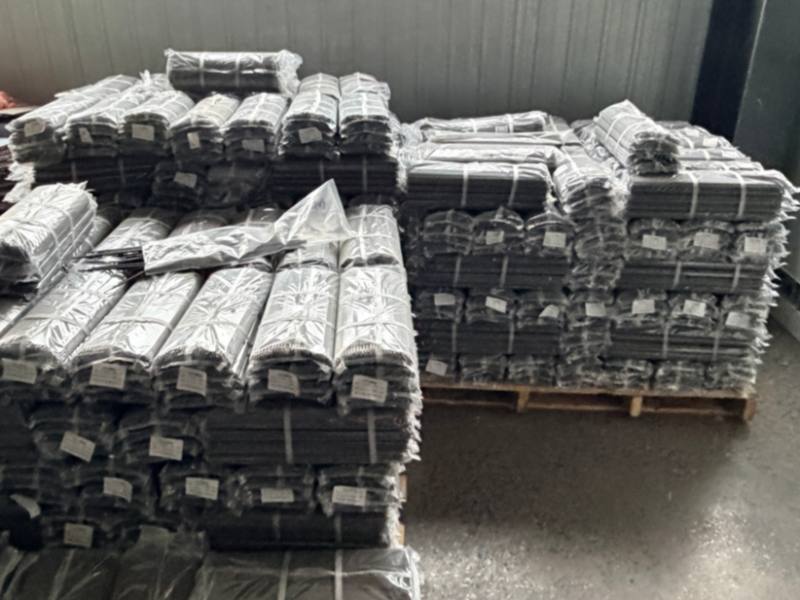
AWS A5.1
- AWS A5.1 Carbon Steel Electrodes: Read the Weld Sequence Before the Part NumberA pipeline enquiry ar
- INQUIRY
AWS A5.1 Carbon Steel Electrodes: Read the Weld Sequence Before the Part Number
A pipeline enquiry arrives as a pipe grade, a wall thickness, a progression direction, a welder's preferred size and a stack of procedure paperwork. This page works in the order the weld is made: which specification owns the electrode, which pass it is for, what the covering and the power source require, which test evidence exists for that diameter, how the cartons arrive, and what a supplier needs to quote.
Reference page for buyers and site engineers. All numeric values are indicative, tied to a batch record, a WPS, a manufacturer datasheet or the applicable edition.
1. A weld is a sequence, not a part number
One circumferential butt joint is built in stages: a root pass closes the open gap, a hot pass follows while the joint is still warm, fill passes build the wall thickness, and a cap pass finishes the profile. The electrode for each stage is fixed by the qualified procedure. Select the stages in your enquiry; the board keeps the questions and the order-line fields separate.
Close the open gap
Procedure fixes the root face, gap, progression and technique. The order line needs the classification, edition, diameter and pass assignment.
Follow the root
Timing, cleaning and interpass limits are procedure variables. A second class may be named for this pass.
Build the wall
Pass count and diameter split by wall thickness. A low-hydrogen class may be named here under the WPS.
Finish the profile
Profile, reinforcement and inspection method belong to the procedure and inspection plan.
| Stage | What the procedure decides | What the classification can tell you | What the order line still needs |
|---|---|---|---|
| Root | Open-root technique, progression, root face and gap | Covering family, classified current, position capability | Classification + edition, diameter, quantity, pass assignment |
| Hot | Timing after the root, cleaning, heat input and interpass limits | Whether the same class is permitted for the second pass | A second line if the WPS names another class |
| Fill | Pass count, stringer or weave, wall thickness coverage | Position capability for the diameter being run | Diameter split, total mass, packing unit |
| Cap | Profile, reinforcement, inspection method | Whether the class is listed for the position used | Classification if the WPS names one separately |
One line, one system: a purchase order line names one governing specification, one edition, one classification and one unit system. Other codes travel in a note, not in the specification field.
[CTA button: Send the pass sequence and the pipe grade]
2. Which specification owns the electrode on your drawing
"Cellulosic pipeline electrode" is a process family spread across two AWS filler-metal specifications. AWS A5.1 covers carbon steel covered electrodes; AWS A5.5 covers low-alloy steel covered electrodes. The -P1 and -G suffixes seen on higher-strength pipe electrodes are A5.5 designations.
| Code | Governing specification | Product description | Where it belongs |
|---|---|---|---|
E6010 | AWS A5.1 / ASME SFA-5.1 | High-cellulose sodium covering, DCEP | This hub page; root-pass discussion |
E6011 | AWS A5.1 / ASME SFA-5.1 | High-cellulose potassium covering, AC or DCEP | This hub page; sites with an AC set |
E4310, E4311 | AWS A5.1M | SI-unit designations of the A5.1 classes | This hub page; see §13 before copying the digits |
E7010-P1, E7010-G | AWS A5.5 | Cellulosic low-alloy classes used on higher-strength line pipe | Neighbouring system; separate order line |
E8010-P1, E8010-G, E9010-G | AWS A5.5 | Higher-strength cellulosic classes in supplier catalogues | Neighbouring system; outside the A5.1 table |
E7018, E7018-1 | AWS A5.1 | Low-hydrogen potassium with iron powder | Same specification, different covering family |
E 38 3 C 2 1, E4310 A U | EN ISO 2560-A / EN ISO 2560-B | European classifications on multi-standard datasheets | Cross-reference note only; see §13 |
E4310 on a Chinese or Japanese datasheet | GB/T 5117 / JIS Z 3211 | National designations sharing the same four digits | Cross-reference note only; see §13 |
A datasheet listing E6010 and E7010-P1 in one table describes a range, not one classification system. If a procedure calls out E7010-P1, writing E6010 because both are cellulosic changes the strength class, the alloy system and the test basis.
[CTA button: Copy the field-condition enquiry]
3. The edition line and the two unit systems
A5.1 uses U.S. Customary Units and A5.1M uses SI. The standard states the two sets of values are not exact equivalents and each system is to be used independently. A certificate mixing an inch diameter with an MPa tensile value from the other system is a document to query.
| Edition | Catalogue status | Handling in an order |
|---|---|---|
A5.1/A5.1M:2026 | Listed for sale, without a historical label | Verify the edition named in the project documents and certificate |
A5.1/A5.1M:2025 | Marked HISTORICAL | Do not describe it as the recent edition; older specifications may invoke it |
A5.1/A5.1M:2012 | Marked HISTORICAL | Widely quoted in public datasheets and in the clause structure cited here |
A5.1/A5.1M:2004 and earlier | Superseded in the public version chain | Historical reading for older drawings |
Third-party summaries describe the 2025 revision as adding general classifications, computed and digital radiography options, and revised fillet-weld requirements. Those summaries are not the standard text. Check the classification list, required-tests table and clause numbering against the edition the project cites; where the formal text is unavailable, leave the new items out rather than presenting a summary as a requirement. The 2012 clause map, visible in the AWS preview, runs from scope through the test clauses to manufacture, identification, packaging and marking of packages, with an informative annex that includes storage and drying conditions, typical amperage ranges and discontinued classifications.
4. What E6010 encodes, and what it leaves to the WPS
E marks a covered electrode for shielded metal arc welding. The next two digits give the tensile-strength class in ksi under A5.1; the third digit is a position-capability group; the fourth, read with the third, identifies the covering family and the classified current and polarity. E6010 reads as a 60 ksi class, a position-capable electrode and a high-cellulose sodium covering classified on DCEP.
| Field | In the designation? | Where the detail lives |
|---|---|---|
Strength class (60 / 70, or 43 / 49 in A5.1M) | Yes | Tension-test requirements table of the applicable edition |
| Position capability (third digit) | Yes, as a group | Classification and required-tests tables; the WPS states the production position |
| Covering family and classified current (fourth digit) | Yes | Classification table; the datasheet gives operating ranges |
Optional supplemental designators (-1, M, H4/H8/H16, R, -G) | Only when agreed and marked | Supplemental clauses and the purchase order |
| Diameter, length, net weight | No | Standard sizes and lengths table plus the packing specification |
| Batch or lot identity | No | Package marking and the lot record (§15) |
| Pipe grade, wall thickness, pass assignment, preheat | No | WPS, PQR and the owner's specification (§11, §12) |
Public tables describe 1 as the all-position group and 4 as the group that includes vertical-down, with E7048 as a low-hydrogen example. A cellulosic datasheet may also list vertical-down as a technique. The digit is a classification group; the qualified procedure states the progression. The order line carries the classification and the WPS reference, not an informal claim about progression.
5. The covering is the process, not a finish applied to the wire
On a cellulosic electrode, the covering is the gas generator. Public technical descriptions explain that its organic content breaks down in the arc into a shielding atmosphere rich in hydrogen and carbon monoxide, producing a forceful arc and a thin, fast-freezing slag. That combination is why the family is associated with open-root work: the arc force acts on a narrow gap and the light slag leaves the keyhole visible.
| Covering family | Classified current (reference) | Arc and slag behaviour in public literature | Typical place in a pipeline sequence |
|---|---|---|---|
High cellulose sodium (E6010) | DCEP | Forceful arc, deep penetration, thin fast-freezing slag | Root and hot passes under a qualified procedure |
High cellulose potassium (E6011) | AC or DCEP | Similar arc character, stabilised for AC | Root and hot passes where an AC set is on site |
High titania sodium / potassium (E6012, E6013) | AC or DC, per classification | Softer arc, more slag, easier bead appearance | General fabrication and repair |
Iron powder titania (E7014, E7024) | AC or DC, per classification | Higher deposition, position limits for some classes | Flat and horizontal fillet production |
Low hydrogen sodium / potassium (E7015, E7016, E7018, E7028, E7048) | DCEP or AC/DCEP per class | Medium penetration, heavier slag, controlled diffusible hydrogen when agreed | Fill and cap passes, or structural work, where the WPS names it |
High iron oxide / iron powder iron oxide (E6020, E6027, E7027) | AC or DCEN per class | Fluid slag, high deposition in flat and horizontal positions | Flat and horizontal fillet work |
Retained moisture in a cellulosic covering is part of how the product functions. Storage instructions for this family differ from the low-hydrogen family; see §14 before writing any drying step into an order or a method statement.
6. Hydrogen, heat and the time between two passes
The gas shield behind the cellulosic arc is hydrogen-bearing. Public guidance treats this as a high-hydrogen weld-metal process and discusses hydrogen-assisted cracking controls: a qualified technique, preheat where the steel and restraint require it, interpass control, limited delay between the root and the hot pass, and a base-metal carbon-equivalent assessment. Under ASME Section IX grouping, cellulosic classes sit in a different F-Number group from low-hydrogen classes, and an F-Number change is an essential variable for procedure qualification.
| Site question | What public sources show | Why one value is not printed here |
|---|---|---|
| Preheat temperature | Varies with pipe grade, wall thickness, carbon equivalent and owner's specification | A single figure could be read as a site instruction; the WPS and PQR control it |
| Time between root and hot pass | Described as "while the joint is still hot"; some sources give a window, others give none | A procedure variable, not a filler property |
| Interpass temperature | A range in some datasheets, a project limit in others | Belongs to the qualified procedure and base-metal assessment |
| Open-circuit voltage | Public examples differ across roughly 65 V, 70 V and 80 V | Examples from different machines are not a purchase specification |
| Diffusible hydrogen of the delivered weld metal | Optional designators H4, H8, H16 exist where the test is agreed | A cellulosic root-pass procedure is not a low-hydrogen procedure by classification |
Where a project asks for hydrogen control, discuss which passes carry that requirement and which document level supports it. A cellulosic root with a low-hydrogen fill or cap produces two specification lines with two storage regimes; we quote and pack them separately.
7. Pass-by-pass selection map
| Pass | First document to open | Electrode questions | Order-line fields often missed |
|---|---|---|---|
| Root | WPS/PQR and joint detail | Which A5.1 class and diameter; DCEP or AC; position capability of the classified size | Diameter split, edition year, pass assignment, packing unit |
| Hot | WPS timing and interpass clause | Same class carried forward, or an A5.5 / low-hydrogen class named | Second line if the class changes; quantity by diameter |
| Fill | Wall thickness and pass-count schedule | Which diameters; is a low-hydrogen class named | Total mass by diameter, label language, carton or tin |
| Cap | Inspection plan and profile requirement | Class and size named by the WPS; cap in the same lot record? | Lot identity, document level, packing drawing |
| What the visitor sends | What is still unknown | Suggested next step |
|---|---|---|
E6010, 3.2 mm, 500 kg for a pipeline spread | Edition, unit system, pass assignment, current type, packing, document level, pipe grade | Ask for the WPS reference and pass schedule |
E7010-P1 for higher-grade pipe | Whether the project cites A5.5, edition, toughness requirement, diameter split | Route to the A5.5 line; do not re-label it as A5.1 |
E6010 plus E7018 for the same joint | Which passes each class covers, and the two storage regimes | Quote two lines with separate packing and lot records |
8. Power source, polarity and the field conditions around the arc
E6010 is classified on DCEP. E6011 is classified on AC or DCEP. Some product datasheets describe a negative-polarity technique for the root pass; that is a product-level operating instruction, not a change to the classification test basis. Where such a technique appears, the datasheet and the WPS take precedence over a general web page.
Field-condition board
Select the conditions reported by the site. The board returns a list of items to confirm before a quotation; it does not select a welding procedure.
Output updates as conditions are added or removed. Copy the resulting note into the enquiry draft in §17.
| Condition | Why it matters to the electrode line | What to state in the enquiry |
|---|---|---|
| AC-only machine available | Narrows the classified current options in the cellulosic family | Machine type, output, whether the WPS permits the AC-classified alternative |
| Engine-driven DC set | Arc behaviour depends on the power source as well as the product | Set model or output characteristic, if the contractor shares it |
| Vertical-down progression on fixed pipe | Technique and position are procedure variables | Progression, pipe axis position, WPS reference |
| Wind, rain or high humidity | Field shelter and packaging become part of delivery | Site storage, required packing, opening sequence |
| Restricted access, tie-in or repair | Smaller diameters may be used for one pass | Diameter-by-pass table, partial cartons acceptable? |
| Mixed procedure | Two storage regimes and two document sets | Two separate order lines, two lot records |
[CTA button: Ask for the lot dossier and packing drawing]
9. What the required-tests table actually covered for a given size
A classification does not state that every diameter has been tested against every test in the standard. In the 2012 edition, Table 4 "Required Tests" assigns test types and positions by classification, by electrode size and by current and polarity; NR means not required for that size row.
Diameter / test-evidence matrix
| A5.1 size (in) | A5.1M size (mm) | Chemical | Radiographic | Tension | Impact | Fillet weld | Position entries |
|---|---|---|---|---|---|---|---|
| 3/32, 1/8 | 2.4, 2.5, 3.2 | NR | NR | NR | NR | NR | Not required for this size row |
| 5/32, 3/16 | 4.0, 4.8, 5.0 | Required | Required | Required | NR | Required | Flat groove tests; vertical and overhead fillet weld test |
| 7/32 | 5.6 | NR | NR | NR | NR | NR | Not required for this size row |
| 1/4 | 6.0, 6.4 | Required | Required | Required | NR | Required | Flat groove tests; horizontal fillet |
| 5/16 | 8.0 | NR | Required | NR | NR | NR | Flat position entry for the radiographic test |
The detail above is an abbreviated reading of a public 2012 table, not a specification statement for a current edition. Its value is the shape of the table: chemical analysis, radiographic soundness, all-weld-metal tension, impact, fillet-weld usability, moisture, absorbed-moisture and diffusible-hydrogen tests are distributed by clause, classification and size. The low-hydrogen moisture test belongs to low-hydrogen coverings; it does not define how a cellulosic covering should be stored.
| Request phrase | Why it is too vague | Better request |
|---|---|---|
| "Send the certificate" | No edition, classification, size or document level | "State the classification, edition, size, lot number and document level for this lot" |
| "Send all test reports" | Tests are distributed by clause and size; some rows are NR | "List the tests required for this classification and size, and the lot-specific results available" |
| "Confirm the electrode meets A5.1" | Omits edition, unit system and supplemental designators | "Name the specification, edition year and unit system used on the package marking" |
| "Is it suitable for this pipe grade?" | Suitability sits in the qualified procedure | "Here is the WPS reference and pipe grade; quote the class it names" |
Our nickel-alloy hub (A5.11), cast-iron hub (A5.15) and hardfacing hub (A5.13) each describe a different required-test package. A buyer working across filler families should not carry one document checklist from page to page.
10. Supplemental designators and the paperwork behind them
The base classification is the visible part of a longer sentence. Optional supplemental requirements add improved toughness and ductility, lower absorbed moisture in the covering and a diffusible-hydrogen limit for the weld metal. They apply when agreed and marked; they are not implied by the four digits.
| Marker | What public summaries describe | Where to confirm it |
|---|---|---|
-1 (E7018-1, E7016-1, E7024-1) | Supplementary Charpy V-notch requirement at a stated temperature; a higher elongation in some classes | Impact requirements table of the cited edition |
M (E7018M) | A separate classification with its own mechanical-property and test-assembly requirements | The applicable table rows; not a marketing suffix |
H4 / H8 / H16 | Optional diffusible-hydrogen limits in mL per 100 g of deposited weld metal | Diffusible-hydrogen clause and the lot-specific record |
R | A moisture-absorption designation where the exposure test is agreed | Absorbed-moisture clause and the package marking |
-G general classifications | Described in third-party summaries of the 2025 revision, with requirements agreed between supplier and purchaser | Formal text of the cited edition; leave it off the page if unavailable |
AWS A5.01M/A5.01 addresses filler-metal procurement and the schedule of tests and documentation agreed for a lot. EN 10204 defines document types; it does not list which mechanical tests were run. A typical-values table on a datasheet is a product description, while a lot-specific record reports results for a stated batch.
11. Base metals: the matching that a classification cannot complete
A5.1 classifies carbon steel covered electrodes. Supplier datasheets list S235/S275/S355-type structural grades, P235/P265/P355-type pressure grades, L210 to L555-type line-pipe designations, API 5L grades, ASTM A106 process pipe and Q235-type carbon steel as application examples. Those are product-literature examples, not a statement that a given pipe grade can be welded with a given electrode on a given project.
| Question | Where the answer comes from | Why the classification alone is not enough |
|---|---|---|
| Which steel grade and product form is on the drawing | Mill certificate and material list | One grade can appear as pipe, plate or fitting with different restraint |
| What strength and toughness does the joint require | Design code, owner's specification, PQR | Filler strength class is one input; toughness is tested under a stated schedule |
| Is there a carbon-equivalent or thickness concern | Base-metal assessment and WPS | Drives preheat and interpass decisions (§6) |
| Is the service sour, low-temperature or high-restraint | Project specification and additional test plan | Extra tests appear on some datasheets; they are project requirements, not A5.1 classification tests |
| Which classification and edition does the WPS name | WPS / PQR | This is the line the purchase order reproduces |
For higher-strength line pipe, public catalogues commonly show A5.5 cellulosic classes for the hot, fill and cap stages, while an A5.1 class may still be named for the root under the qualified procedure. When an enquiry only says "higher-grade pipe", our first question is the WPS reference rather than the electrode size.
12. Procedure documents are not filler documents
| Document family | Examples on pipeline projects | Question it answers |
|---|---|---|
| Filler classification | AWS A5.1/A5.1M, AWS A5.5/A5.5M, ASME SFA-5.1, EN ISO 2560 | How the consumable is classified and which tests support it |
| Procedure qualification | API 1104, ASME BPVC Section IX, AWS D1.1 | Which variables, positions and test results qualify the weld procedure |
| Welder qualification | Welder-performance sections of the governing code; QW-432 F-Number groupings | Which welder may deposit which filler group under which conditions |
| Procurement and documentation | AWS A5.01M/A5.01, EN 10204, purchase order, SDS | What documents and lot traceability accompany the goods |
| Construction and safety rules | Project specification, local regulation, ANSI Z49.1 | Site practice, shelter, handling and safety information |
Two clarifications help buyers. A phrase such as "an API 1104 electrode" is shorthand rather than a classification: public pipeline guidance describes that code as qualifying a procedure, not a consumable. Second, ASME IX groups cellulosic classes in one F-Number and low-hydrogen classes in another; public comparison articles also note that API 1104 and AWS D1.1 maintain independent qualification systems. Verify those code-reading points against the editions named in the project.
13. Four E4310s that are not the same four digits
E4310 can be an A5.1M designation, a Chinese model code, a Japanese designation or part of an ISO 2560-B string. The digits look identical; the test bases do not.
| Printed code | System | What the digits mean there | What to write on the order line |
|---|---|---|---|
E4310 | AWS A5.1M | SI-unit counterpart of the A5.1 E6010 class | AWS A5.1M, edition year, E4310, unit system stated |
E4310 | GB/T 5117 | Chinese model code; public summaries list it as high-cellulose sodium in the E43 series | The GB model code with its edition, when the project cites that system |
E4310 | JIS Z 3211 | Japanese designation on multi-standard datasheets | The JIS designation with its edition, when the project cites that system |
E4310 A U | EN ISO 2560-B | System B string shown alongside an A5.1 E6010 claim | The full ISO 2560-B designation with its edition |
E 38 3 C 2 1 | EN ISO 2560-A | Public datasheets pair this string with cellulosic products; C marks the cellulosic covering type | The full System A designation; do not shorten it to E4310 |
Public material describes EN ISO 2560 as two systems: System A based on yield strength and a 47 J impact criterion, System B based on tensile strength and a 27 J impact criterion. Public summaries also describe GB/T 5117-2012 as replacing the 1995 edition with a revised title and a higher minimum tensile value for the E43 series. Both descriptions come from third-party summaries; check the formal text before printing numbers. The A5.1 informative annex includes a comparison table of classifications, but a comparison is a reading aid, not an equivalence ruling.
Cross-check rule: comparable is not equivalent. One order line names one governing system, one edition and one classification. Other codes belong in a note alongside the WPS reference.